


National leadership, international legal scholars, and water experts condemn unilateral actions, warn against weaponization of water
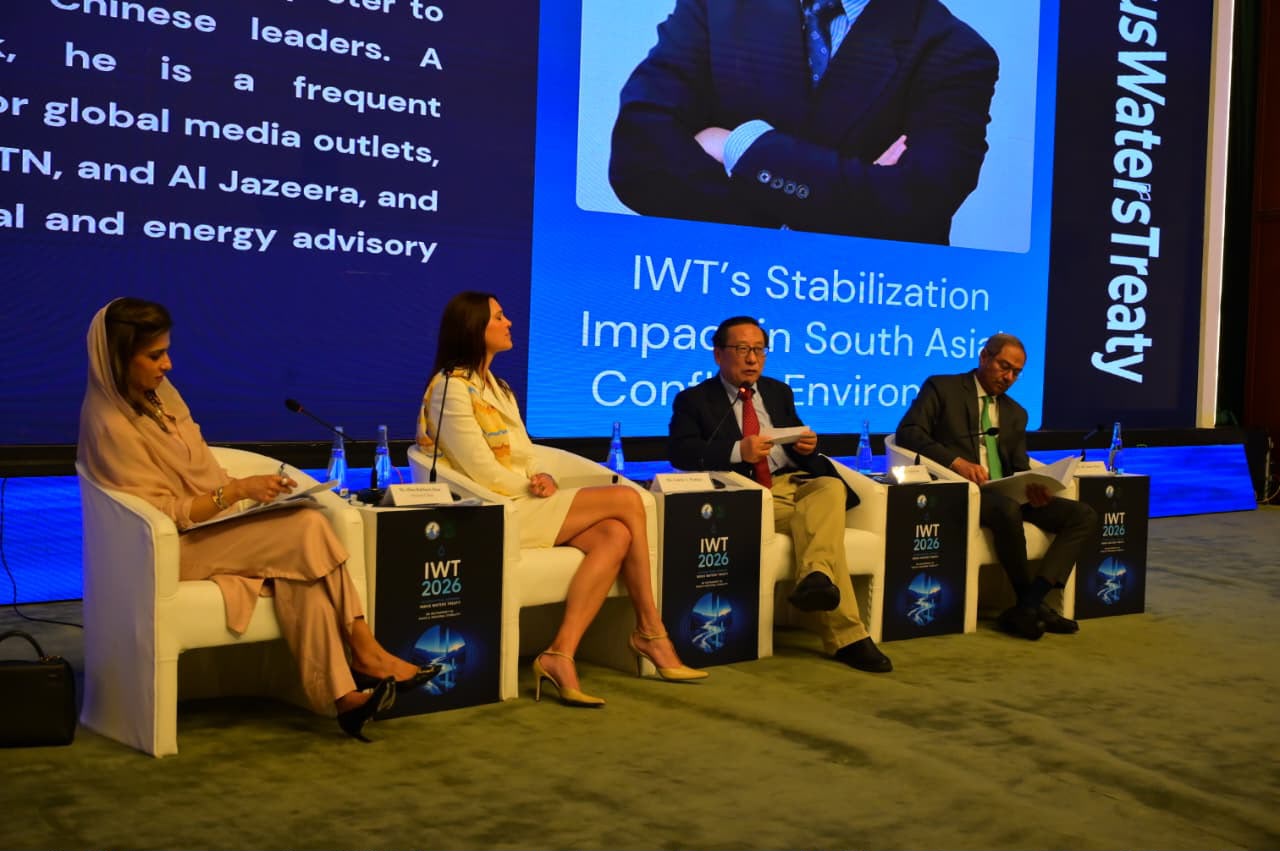
ISLAMABAD, July 1, 2026 – An international seminar titled “Indus Waters Treaty: An Instrument of Peace and Regional Stability” concluded here on Tuesday with a powerful reaffirmation of the 1960 water-sharing agreement as one of the world’s most successful and enduring transboundary treaties.
The seminar, jointly organized by the Ministry of Information and Broadcasting (MoIB) and the Institute of Regional Studies (IRS), brought together national leadership, international legal scholars, diplomats, policymakers, water experts, and strategic analysts to deliberate on the legal, strategic, environmental, and humanitarian dimensions of the Indus Waters Treaty (IWT) amid emerging regional and global challenges.
Structured around two thematic technical sessions and a high-level concluding session, the seminar examined the Treaty from legal, institutional, strategic, humanitarian, and environmental perspectives. Deliberations focused on the Treaty as an enduring legal and institutional framework for conflict prevention, while also assessing the implications of non-cooperation, evolving climate challenges, transboundary water governance, human security, and the continued relevance of treaty-based mechanisms for sustaining regional peace and stability.
Treaty’s Sanctity and Legal Inviolability
A broad consensus emerged among participants that unilateral attempts to suspend, alter, or place the Treaty in abeyance are incompatible with its legal framework and undermine the fundamental principles governing international agreements.
Participants emphasized that the sanctity of treaties, respect for international commitments, and peaceful settlement of disputes constitute essential pillars of the rules-based international order. Any erosion of these principles, it was observed, carries implications extending far beyond South Asia by weakening confidence in international legal obligations and multilateral institutions.
Delivering the inaugural address, Federal Minister for Information and Broadcasting Attaullah Tarar described the Treaty as a remarkable example of the rules-based international order, embodying the principles of good faith, pacta sunt servanda—the sanctity of agreements—and the peaceful resolution of disputes.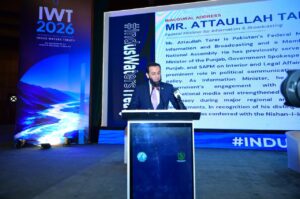
The minister emphasized that for Pakistan, water is not simply a resource but a matter of life itself. “Pakistan’s identity is deeply connected with the Indus River and the Indus Valley Civilization,” he said, noting that the country’s 240 million people have an inalienable right to its waters.
Tarar stressed that international agreements cannot be amended, revoked, suspended, or held in abeyance unilaterally. He reiterated that the Treaty had come into existence through mutual consensus and that any amendment or revision could only be made through mutual agreement between the parties.
Condemnation of Unilateral Actions
Speakers strongly condemned India’s unilateral decision to place the Treaty in abeyance, warning that such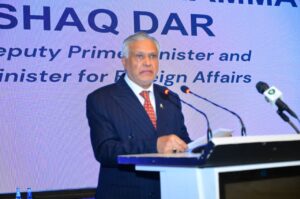 actions threaten the foundation of the international legal order and risk triggering severe strategic conflict in South Asia.
Deputy Prime Minister and Foreign Minister Ishaq Dar, speaking at the concluding session, stated that by illegally holding the Treaty in abeyance, New Delhi had undermined the international legal system and put the region at risk of conflict.
“The sanctity of treaties is one of the foundations on which peaceful relations between nations are built,” Dar said, urging the international community not to allow the weaponization of water. He called for viewing transboundary rivers as instruments of bringing countries closer together rather than becoming sources of discord.
Bilawal Bhutto Zardari, Chairman of the Pakistan People’s Party and former foreign minister, delivered a keynote address in which he warned that if peace could not be imagined with the Strait of Hormuz blocked, how could the world expect peace and stability in the region with the IWT held in abeyance.
 He stated that India had weaponized water against Pakistan by targeting the country’s lifeline. He called for treating every Indian action in violation of the IWT as an act of war against Pakistan and urged the international community to support Pakistan in challenging Indian illegal actions on the IWT to avoid escalation of conflict in the region.
Climate Crisis and Humanitarian Dimensions
The seminar highlighted the growing strategic importance of the Treaty in the context of climate change, accelerating glacier melt, increasing hydrological variability, recurrent floods, prolonged droughts, and rising water insecurity.
Federal Minister for Climate Change and Environmental Coordination Dr. Musadik Malik stated that Indian illegal actions on the IWT were compounding the climate crisis in Pakistan. “It is neither a crisis of climate nor a crisis of water but a crisis of justice,” he said, adding that by violating one of the strongest treaties in the world, India had shaken the foundations of the international legal system.
Participants noted that stable, transparent, and cooperative management of transboundary rivers has become increasingly critical for ensuring food security, disaster preparedness, sustainable development, and regional resilience. Particular emphasis was placed on the indispensable role of timely hydrological data sharing, technical cooperation, and institutional engagement in safeguarding downstream populations.
Deliberations also examined the humanitarian dimensions of transboundary water governance, recognizing that the Indus River system sustains the livelihoods, agriculture, economy, and food security of over 240 million Pakistanis. Participants stressed that water should never be weaponized or employed as an instrument of political coercion, reaffirming that equitable, predictable, and cooperative management of shared rivers remains a prerequisite for lasting peace and sustainable development.
Global Implications and Way Forward
International experts participating in the seminar observed that the issues confronting the Indus Basin increasingly reflect broader global challenges associated with transboundary water governance. The seminar therefore called for strengthening international legal norms, enhancing cooperation among riparian states, and reinforcing institutional mechanisms that protect shared freshwater resources and the rights of downstream communities worldwide.
The conference further underscored Pakistan’s continued commitment to resolving all Treaty-related matters through the legal, institutional, and diplomatic mechanisms provided under the IWT and international law. Participants reiterated that adherence to established dispute-resolution processes, constructive dialogue, and good-faith implementation of treaty obligations remain the only sustainable path toward regional stability and mutual confidence.
Syed Mehr Ali Shah, Pakistan Commissioner for Indus Waters, stated that Indian actions were against the dispute resolution mechanisms provided for in Article IX of the Treaty itself and regretted the suspension of data flows from India under the Treaty.
Conclusion
Concluding the proceedings, the seminar reaffirmed that the preservation of the IWT is not solely a bilateral imperative but a matter of wider international significance. Protecting its integrity serves to reinforce the credibility of international law, strengthen the global rules-based order, and promote the peaceful, cooperative, and sustainable management of shared natural resources for present and future generations.
In his concluding remarks, President IRS Ambassador Jauhar Saleem stated that enduring peace could be best secured through respect for international law, fidelity to international commitments, and appreciation for the institutions that enable nations to resolve their differences peacefully. He added that lasting water security depended not only on the quantity of available water but also on certainty, transparency, predictability, and cooperation. Therefore, the only way forward was abiding by the Indus Waters Treaty in letter and spirit.
