


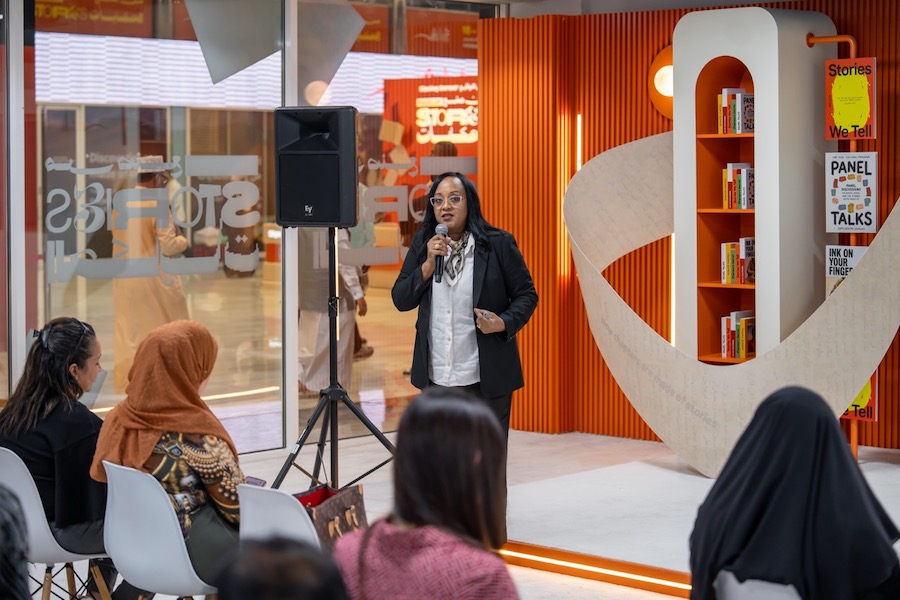
Sharjah,UAE— Artificial intelligence may make writing faster and more efficient, but excessive reliance on it risks eroding the personal experiences and individual voices that give literature its meaning, Sudanese author Ann El Safi told audiences at the 45th Sharjah International Book Fair (SIBF 2026).
Speaking during a session titled “Creativity Between Humans and Algorithms… The Future of Writing in the Digital Age,” El Safi examined the growing influence of artificial intelligence on literature, questioning whether technology can support creative expression without diminishing the human experiences that inspire it.
The Sudanese journalist and author, whose works include The Bread of Gypsies (2019) and Walking on Glass (2022), also highlighted the importance of developing strong reading and analytical skills. She was a runner-up for the Al-Tayeb Salih International Creative Writing Award in 2022.
“It is important for a reader to study, analyse, and comprehend various types of literature,” she said, emphasising that critical engagement with books remains essential to developing a writer’s understanding and creative abilities.
Technology cannot replace lived experience
Turning to the impact of artificial intelligence, El Safi acknowledged its potential to assist with cognitive tasks and make the writing process more efficient. However, she cautioned against allowing technology to take the place of independent thought and personal expression.
“Absolute reliance on artificial intelligence can result in the loss of personal experience and the individual ‘voice’ in writing,” she warned.
El Safi argued that meaningful literature draws on experiences, struggles and insights that cannot be fully replicated through technology.
“True writing stems from life’s struggles and personal wisdom, which cannot be fully digitised,” she said.
She also distinguished between producing technically accomplished content and creating literature informed by genuine human experience, raising questions about the extent to which technology can contribute to authentic artistic expression.
As AI-generated content becomes increasingly sophisticated, El Safi said the boundaries between human creativity and machine-produced writing are becoming harder to distinguish.
“The distinction between a machine-generated text and one born from human trial, error, and passion is becoming increasingly blurred,” she observed.
Balancing innovation with creative integrity
Rather than rejecting technological advances, El Safi called for writers to adopt a balanced approach that combines the benefits of artificial intelligence with independent judgement and creative responsibility.
“Intellectual work must evolve to include both technological assistance and unyielding human scrutiny,” she said.
She concluded by encouraging writers to adapt to emerging technologies without surrendering the originality, personal perspective and lived experiences that distinguish their work.
The session formed part of SIBF 2026’s cultural programme, which brings together writers, thinkers and readers for discussions exploring literature, creativity and the stories behind books.
Organised by the Sharjah Book Authority, the 45th Sharjah International Book Fair is being held at Expo Centre Sharjah from November 4 to 15, 2026. The 12-day event hosts 3,212 publishers and exhibitors from 126 countries, showcasing more than 1.7 million titles.
